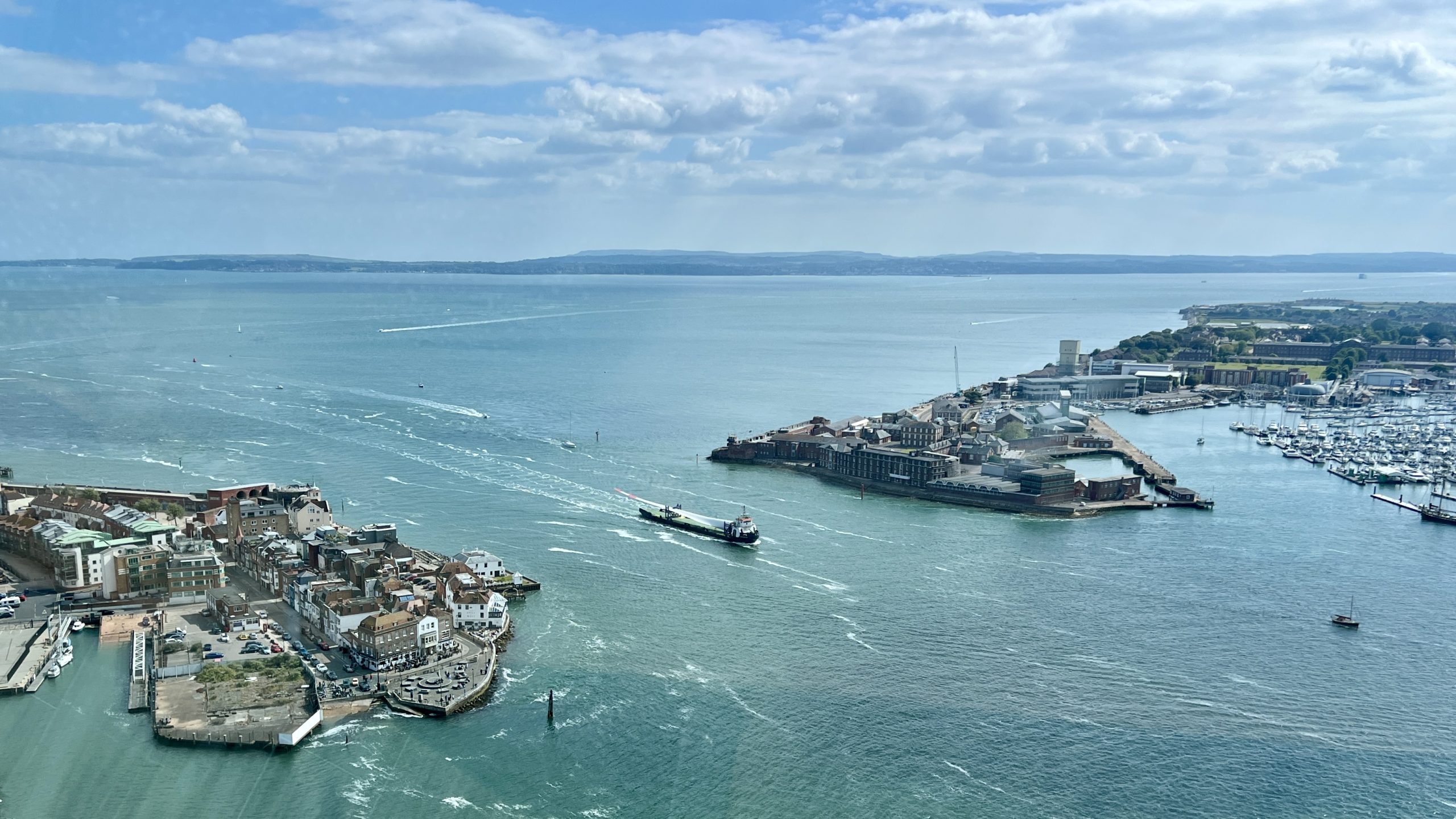
Portsmouth has spent most of the last thousand years tied to the sea, and its story is easiest to follow by following the water. Here is the short version, from a Roman shore fort to the beaches of D-Day.
Roman beginnings and a natural harbour
The sheltered water here was prized long before the modern city existed. At the top of the harbour the Romans built Portchester Castle in the third century, and its walls still stand as the most complete Roman defences in northern Europe. That deep, protected anchorage is the thread running through everything that follows.
A royal dockyard is born
The town itself was laid out in the late twelfth century by the Anglo-Norman merchant Jean de Gisors, and Richard the Lionheart granted it a royal charter in 1194. The decisive moment came in 1495, when Henry VII built the first dry dock in the world here, fixing Portsmouth as the permanent home of the Royal Navy.
You might also like
It was from this harbour that Henry VIII watched his fleet, and his great warship the Mary Rose sank just offshore in 1545, to be raised again more than four centuries later.
Defending the nation
As the navy grew, so did the defences. Tudor and Georgian forts, sea walls and, later, the ring of Victorian Palmerston forts on Portsdown Hill all went up to protect the dockyard, while the anchorage at Spithead became the stage for royal fleet reviews.
Dickens, Victorian growth and the blitz
The city gave the world Charles Dickens, born here in 1812, and boomed through the Victorian age as the dockyard expanded. That same naval importance made it a target, and Portsmouth was among the most heavily bombed cities in Britain during the Second World War.
D-Day and the modern naval city
Its finest hour came in June 1944, when Portsmouth was a main embarkation point for the D-Day landings, with the invasion planned nearby. Today the working naval base sits alongside the Historic Dockyard, the Spinnaker Tower and a reinvented waterfront.
If you would rather see the history than just read it, there is an easy route through it.
Start at Portchester Castle for the Romans, cross to the Historic Dockyard for the age of sail, and finish at the D-Day Story in Southsea for the twentieth century.
Do that in a day or two and the whole arc of the city, from shore fort to modern port, falls neatly into place.