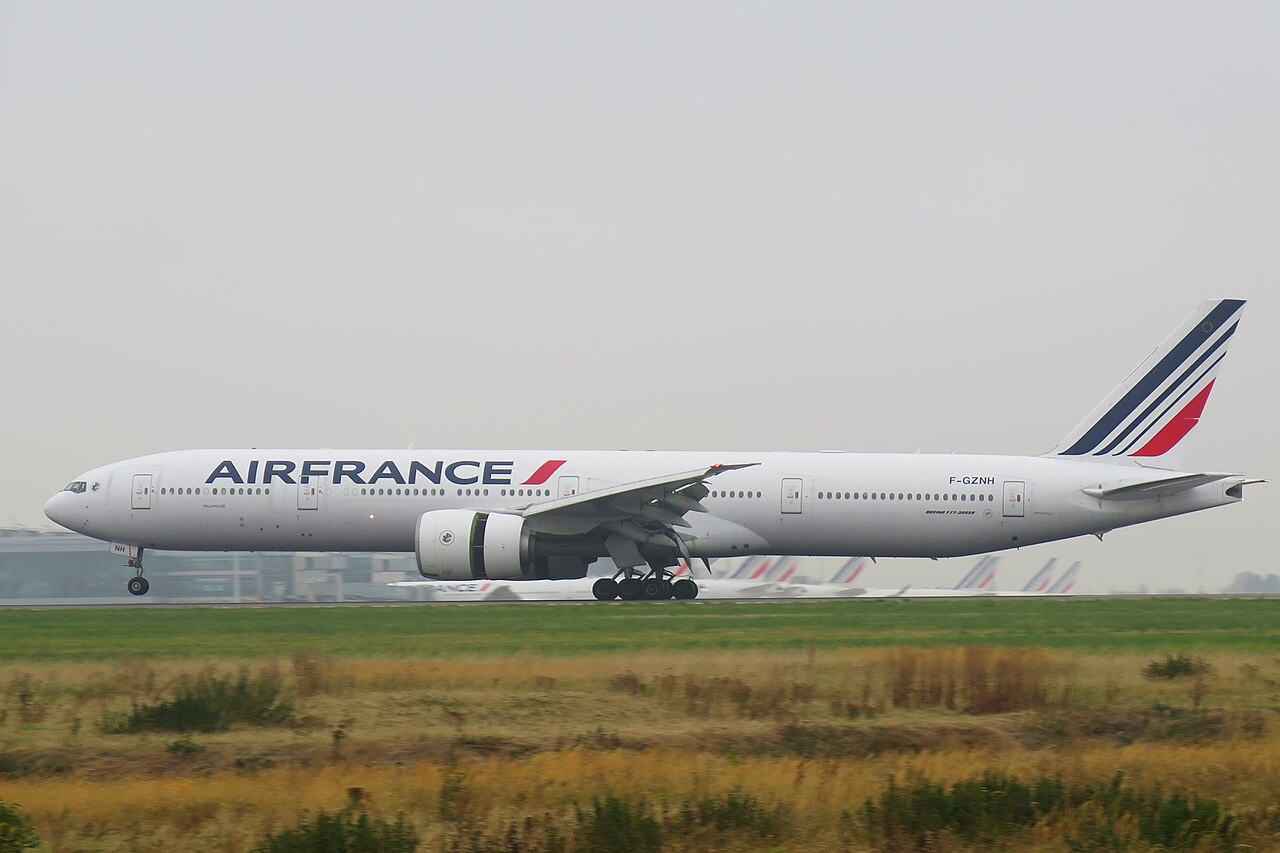
An Air France Boeing 777 flying from Houston to Paris declared a general emergency over Ireland early on Monday and diverted to Dublin, where it landed safely.
Flight AF99 had left Houston’s George Bush Intercontinental shortly after 4pm local time on Sunday, bound for Paris Charles de Gaulle with a scheduled arrival of 8:15am.
As the jet crossed Irish airspace, the crew selected squawk 7700, the code that tells air traffic control an aircraft has a general emergency. It turned for Dublin from around 250 miles out, began descending, and touched down at about 6:30am Irish time.
The aircraft, a Boeing 777-300ER registered F-GZNH, slowed to taxi speed within a minute of landing and made its way to a stand. Flight-tracking data, picked up by the aviation site AIRLIVE, showed the whole diversion unfold in a little over half an hour.
The reason has not been officially confirmed. One early account pointed to a passenger needing medical help, but Air France had not commented on the cause or on the condition of anyone on board.
What is squawk 7700?
Squawk codes are four-digit numbers pilots enter into a transponder so controllers can tell flights apart. 7700 is the general emergency code, and setting it flags the aircraft for priority handling and the quickest safe route to the ground.
It does not spell out the problem, only that the crew needs help. Controllers then clear the way for a diversion, as happened here with Dublin stepping in as the nearest suitable airport. These unplanned stops are more routine than they sound, and not long ago an easyJet flight turned back to Liverpool after a bird strike.
What happens next?
Diversions like this are usually followed by checks on the ground before a flight can continue. AF99 was expected to carry on to Paris once those were done and any passenger needs had been seen to.
We will add more if Air France says anything about what caused it, part of our rolling UK travel and breaking news coverage as the story develops.