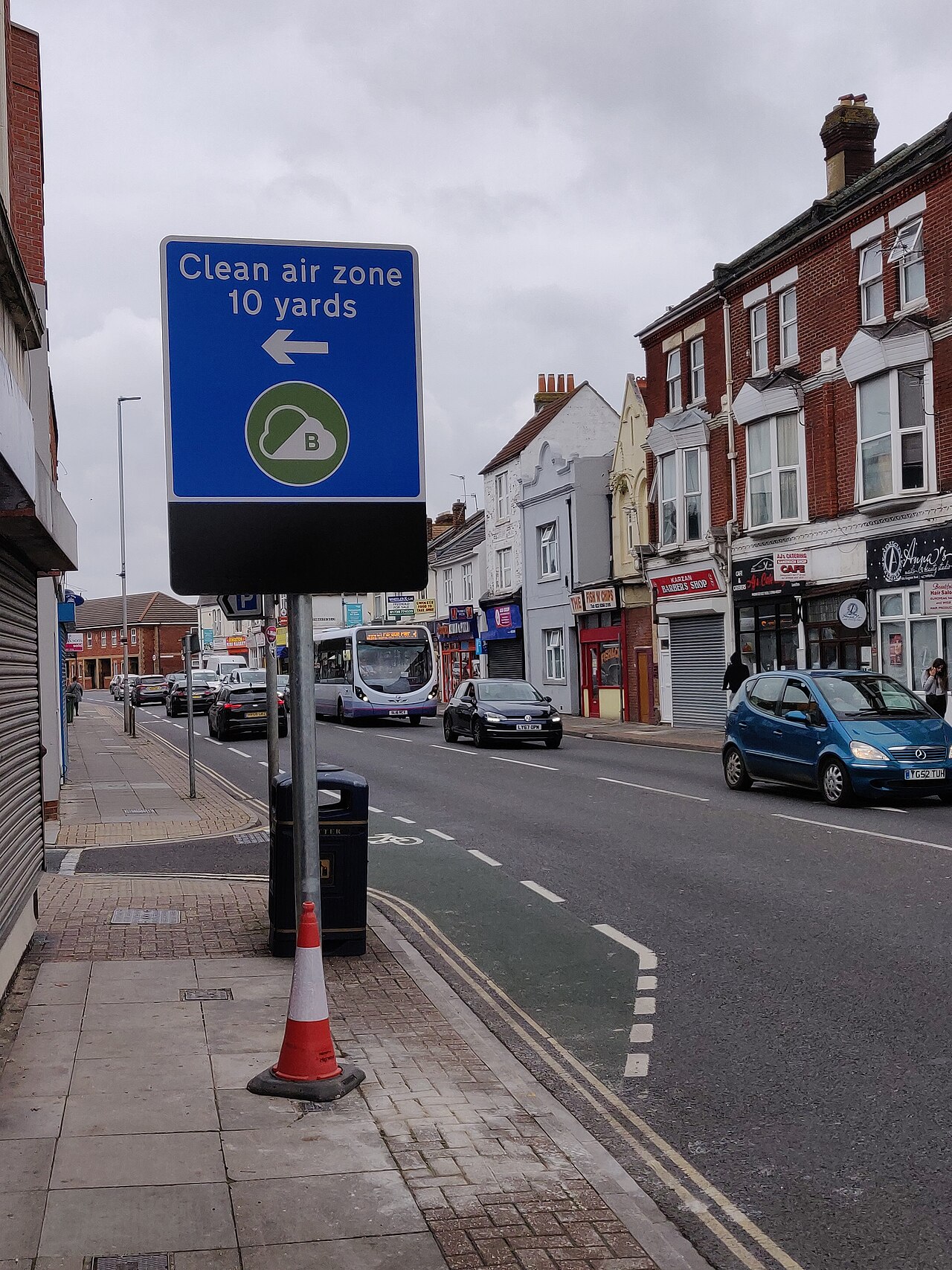
If you are driving into Portsmouth, you may have seen the “Clean Air Zone” signs and wondered whether you are about to be charged. For most people the answer is a reassuring no, but it is worth knowing the details. Portsmouth And has broken down exactly how the city’s Clean Air Zone works and who actually pays.
What it is
Portsmouth runs a Class B Clean Air Zone, which has been live since late 2021. It operates 24 hours a day, every day, and is enforced automatically by number-plate cameras. The aim is to clean up the city’s air by charging only the most polluting commercial and for-hire vehicles, not ordinary drivers.
Who pays, and who does not
This is the part that matters most, so here it is plainly. A Class B zone only charges certain non-compliant vehicles, and crucially, private cars, vans and motorcycles are never charged in Portsmouth, whatever their emissions. If you are visiting in your own car or van, there is nothing to check, nothing to pay and nothing to register.
You might also like
Charges apply only to older, non-compliant taxis, private hire vehicles, buses, coaches and heavy goods vehicles. “Non-compliant” essentially means older than Euro 6 diesel or Euro 4 petrol; newer and zero-emission vehicles in those categories pay nothing either.
The charges
For the vehicles that are affected, the daily charges are:
| Vehicle | Daily charge |
|---|---|
| Private cars, vans and motorcycles | No charge |
| Taxis and private hire vehicles (non-compliant) | £10 |
| Buses, coaches and HGVs (non-compliant) | £50 |
The charge is once per day from midnight to midnight, however many times you enter. Miss a payment you owed and you can expect a penalty charge of around £60 on top.
Where the zone is
The zone covers roughly three square kilometres in the south-west of the island: the city-centre and harbour side, taking in Gunwharf Quays, Portsmouth Harbour and the Wightlink ferry port, the Commercial Road and Cascades area, Old Portsmouth and parts of Southsea. The motorways and the A27 are outside it. Boundaries can be adjusted, so charged drivers should check the official interactive map rather than guess.
How to check and pay
If you drive one of the affected vehicle types, use the GOV.UK Clean Air Zone vehicle checker, which tells you whether your exact vehicle is charged in Portsmouth from its registration. Payment is made through the GOV.UK Clean Air Zone payment service, not the council directly, and you can pay from six days before to six days after you travel. There are national exemptions and discounts for things like emergency vehicles and some wheelchair-accessible taxis, so check if you think you qualify.
“The message we give most visitors is simple,” says a member of our team. “If you are in a normal car, van or on a motorbike, ignore the signs and enjoy your day. The zone is not aimed at you.”
The bottom line
For the overwhelming majority of people driving into Portsmouth, the Clean Air Zone changes nothing at all. It is only operators of older taxis, buses, coaches and lorries who need to check their vehicle and budget for the daily charge. Everyone else can drive in, park up and forget the zone exists.