If Bilbao is the famous way to reach northern Spain by sea, Santander is the quieter one. The ferry drops you straight into the capital of Cantabria, a handsome bayside city with a grand beach, and puts the mountains of the Picos de Europa within easy reach, all without the long drive down through France.
You might also like
It is a proper voyage rather than a quick hop, so it pays to know what you are signing up for. Here is who runs it, how long it takes, how it compares to the Bilbao route, what it costs and what is waiting when you dock.
How the crossing works
Brittany Ferries is the only operator, sailing from Portsmouth International Port across the Bay of Biscay to Santander. The crossing runs to around 30 to 33 hours depending on the ship and schedule, so you spend one or two nights on board rather than a single overnight. There are usually between two and four sailings a week, with more in the summer than the winter.
The basics are easy to hold in your head:
| Operator | Brittany Ferries |
| Crossing time | About 30 to 33 hours |
| Frequency | Around 2 to 4 sailings a week |
| Ships | Salamanca, Santoña and sister vessels |
Every sailing leaves from Portsmouth International Port on the western shore of the city, just off the M275 and well signposted from the motorway, so follow the port signs rather than the city-centre ones.
Santander or Bilbao?
Both Brittany Ferries routes land you in northern Spain at a similar price and crossing time, so the choice is really about where you want to start. Santander sits further west and makes a natural base for the beaches of Cantabria and the Picos de Europa mountains, while Bilbao drops you closer to the Basque Country, San Sebastian and the Rioja. If the Basque end appeals more, our guide to the Portsmouth to Bilbao ferry covers that route in full.
Many regulars simply pick whichever sailing fits their dates, then drive the coast between the two, as they are only a couple of hours apart.
Life on board
On a crossing this length the ship is part of the holiday. The vessels on the route carry cabins, restaurants and bars, shops, a cinema and open deck space, and a cabin is effectively essential rather than optional for a trip of one or two nights. Settling in and booking a dinner table early makes the time pass easily.
Two things are worth planning for:
- the Bay of Biscay can get lively, so pack travel-sickness remedies if you are prone to it;
- cabins and restaurant slots fill up in peak season, so reserve them when you book rather than on board.
Approached as a mini-cruise rather than dead time, the long crossing is genuinely enjoyable.
What it costs
This is not the cheapest way to reach Spain, and it does not try to be. Fares shift a lot with the season and how early you book, but as a rough guide a foot passenger can cross from around 50 pounds one way in the quieter months, while a car with passengers tends to start near 170 pounds and climbs to 300 pounds or more at the summer peak. A cabin is an extra charge on top, often adding somewhere between 80 and 150 pounds depending on the type, and is effectively required on a crossing this long. Average fares sit around 200 to 250 pounds off-peak and well over 500 pounds in July, so always check a live quote before you book. The comparison that matters is not ferry against flight alone, but ferry against flights plus car hire, fuel and the days a long drive would swallow, because here your own car arrives with you.
The usual advice applies: book early, avoid the school holiday peaks where you can, and compare a few dates, as prices swing widely on this route.
Arriving in Santander and Cantabria

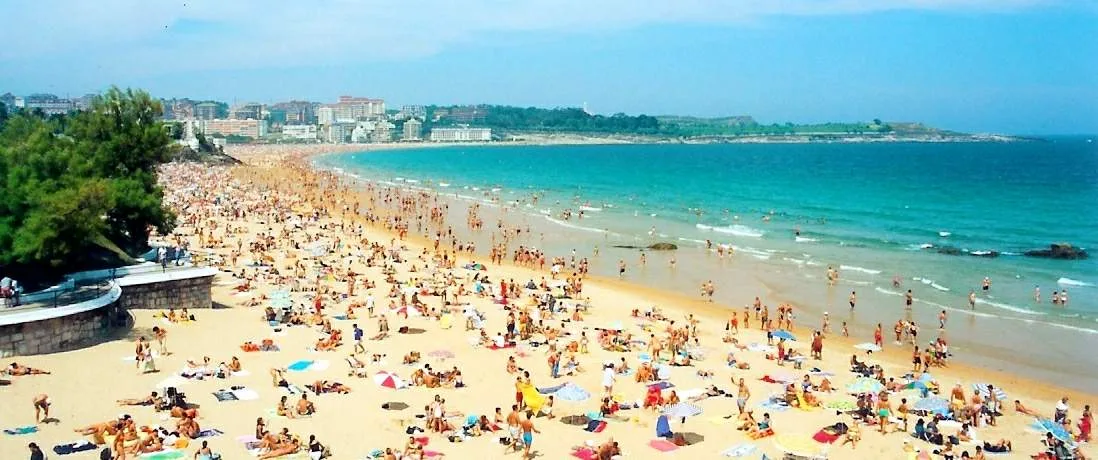
Santander rewards the journey. The ferry port is a short walk or ride from the centre, and the city opens onto the long golden sweep of El Sardinero beach, the grand Magdalena Palace on its own peninsula and a lively run of seafront cafes and pintxos bars. It is a relaxed, elegant place to spend a day or two before heading on.
It is also a superb base for the wider region. The Picos de Europa mountains are an easy drive inland, the medieval town of Santillana del Mar and the Altamira caves lie close by, and the Cantabrian coast runs for miles in both directions. One foot passenger put the appeal of arriving by sea simply.
You wake up, the mountains are right there behind the city, and your whole holiday is in front of you with the car already unpacked.
Few arrivals in Spain feel as unhurried as stepping off the boat into Santander.
Is it worth it?
The Santander ferry suits anyone travelling with a car, touring northern Spain, or happy to fold the journey into the break itself. If you only want to reach a city quickly and cheaply, fly. If you want your own wheels, no airport queues and a slow start to a Cantabrian or mountain road trip, this long, comfortable crossing earns its place.